A child's maturity begins the moment he learns to humble himself before his parents and honor the dignity they deserve.
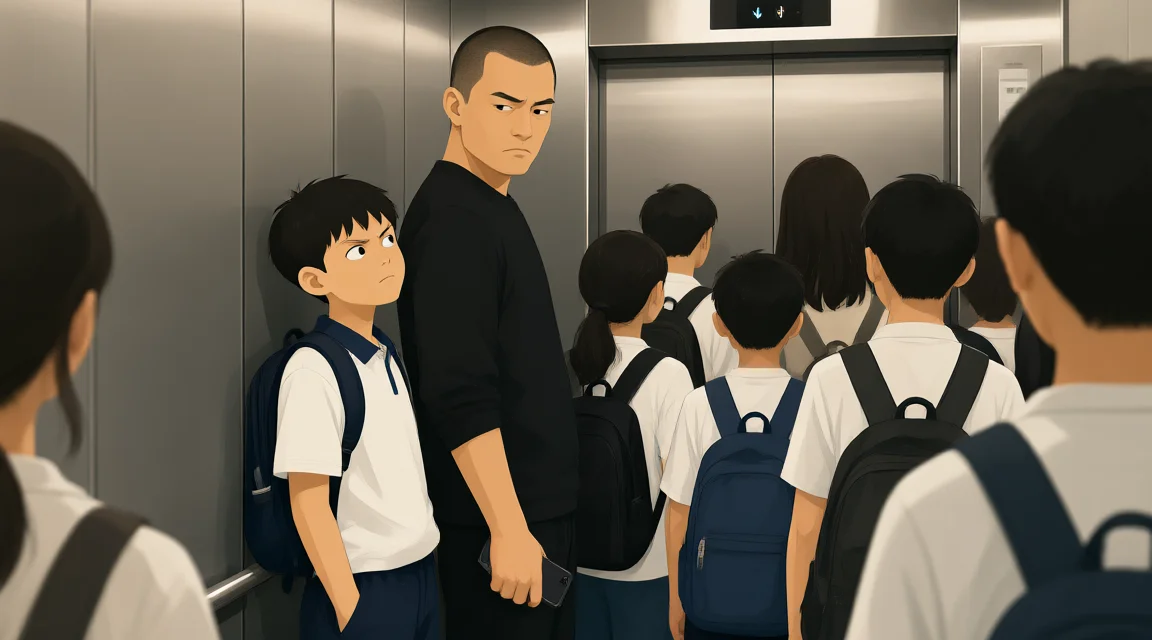
When the elevator doors parted during the morning rush, the car was already packed. Commuters rushing to work, familiar neighbors from the building, and a cluster of grade-schoolers with backpacks filled the middle. In the cramped space, most of the adults kept quiet. Only a father and son in the corner stood out—one looking visibly irritated and impatient, the other visibly awkward.
The boy was around ten. He leaned back against the steel wall, both hands shoved deep into his uniform pockets. He didn't look at the floor numbers flashing overhead or at the doors. Instead, he fixed his father with a venomous, sideways glare. This was no hurt child’s sulk. It was undisguised resentment and contempt. The cause was trivial: just before leaving, the father realized he had forgotten his phone and ran back inside to grab it. The detour cost them thirty seconds, but they missed the previous elevator car. The boy took the delay as an unforgivable slight. He had started complaining in the hallway and kept at it in the car, needling his father the whole ride with a nearly scrutinizing stare.
Most of the passengers in the middle were small children, so the boy’s line of sight remained unobstructed. His glare cut cleanly across the car, hanging over the heads of the other children. Neighbors and strangers alike couldn't help but look.
The man being glared at looked remarkably fit. He had cropped hair, a straight back, and the deep yellow-brown complexion of someone who had spent years working outdoors. Over the past couple of years, his son had shot up, already reaching his father’s shoulder. Yet standing beside the boy, the man looked diminished. He parted his lips as if to say, It’s fine, we’ll take the next one, but thought better of it. Aware of the eyes on them, he held the retrieved phone tightly in his fist and stood in place, enduring the silence.
Physically, the boy was leaving childhood behind. Emotionally, he was ruthless. Forgetting a phone on a rushed morning is ordinary human clumsiness. But in the boy’s eyes, any stumble that disrupted his schedule was an offense without pardon. He felt entitled to strip his father of dignity in a crowd and reduce an adult to public shame.
The scene was jarring not just for its cruelty, but for how practiced it felt. A child does not invent this brand of arrogance during a thirty-second elevator ride. To sneer at a parent before strangers, cornering the family's breadwinner without hesitation, requires long-standing permission. It points to a household where the baseline of respect has quietly collapsed.
In many families, a father’s dignity is ground down by small, daily cuts. A mother might routinely pick apart his carelessness, dullness, and disorganization within earshot of the children. During household arguments, she might recruit the child to her side, turning the father into a defendant on trial. When the mother fails to protect the father’s dignity in front of the child, the child learns contempt with terrifying speed. He comes to view patience as weakness, mistakes as targets, and his father’s self-respect as entirely expendable.
This form of spoiling has little to do with material gifts. It is an unearned authority quietly handed to a child—the illusion that his temper gives him license to sit in judgment over his parents. A boy who has never witnessed respect for his father at home will never know how to offer it in public.
The elevator chimed at the ground floor. The doors slid open. The boy slipped sideways out of the car with a sullen face and hurried forward without looking back. His father sighed and followed, phone clenched in his hand, silently pursuing the resentful figure ahead.
Watching the two figures disappear into the street, the real loss had nothing to do with a missed elevator. It was the important lesson missing from the boy’s growing up. What he needed was not to rush through the school gate, but to step out of the elevator, stop, turn around, and look at his father’s awkward, helpless face, and say: "Dad, I'm sorry. I was out of line."