If we have not patiently taught someone, we cannot demand that they overcome their natural fear in order to accommodate us.
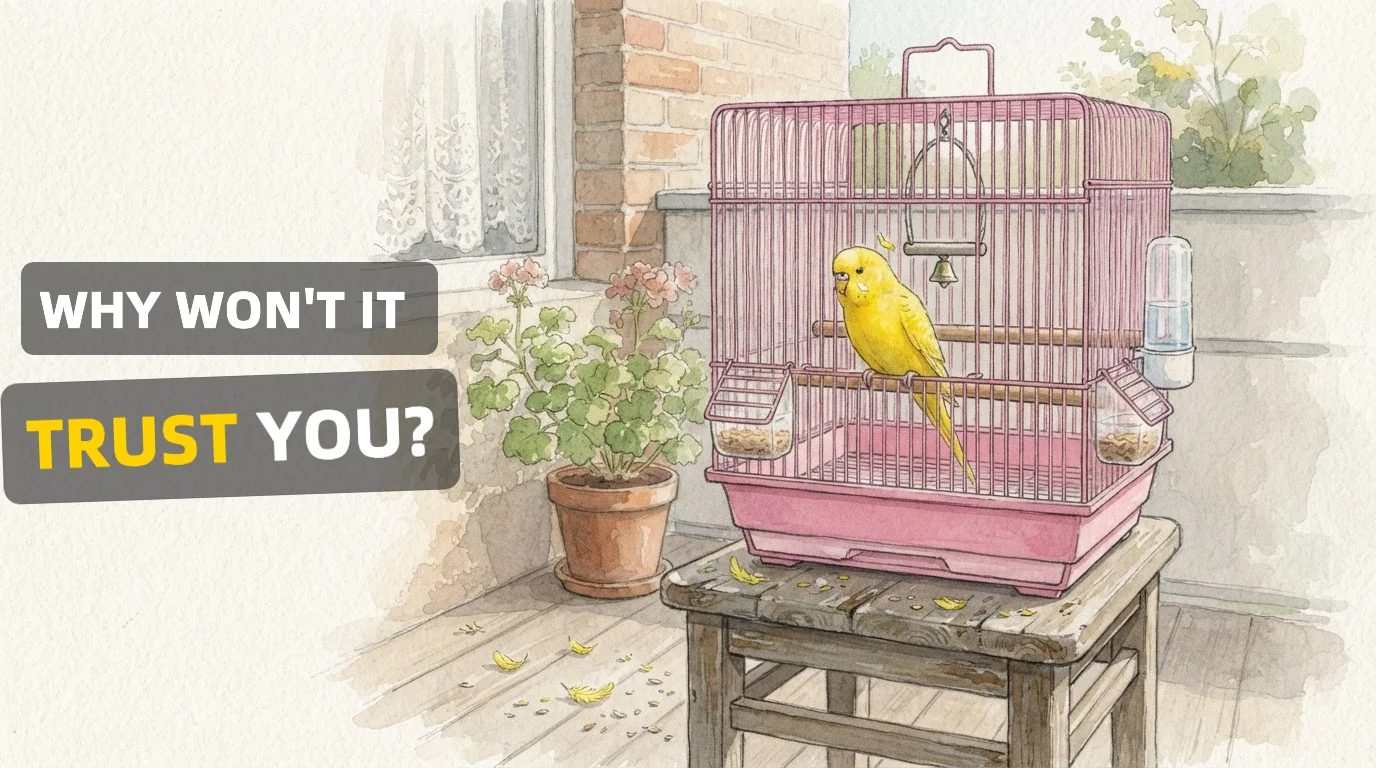
The cage sat on an old wooden stool in the corner of the balcony. Inside was a parrot bright yellow from head to tail. There had been two of them once, but one had died for reasons I never learned. Now this one was alone.
Small patches of white feathers framed its beak. Its tail was narrow and long. When the children were home, they liked to lean over the wire cage and watch it, trying to coax a few sounds from it.
The children had gone away for several days, so caring for the little bird became my job. Yet within days, I had fallen into a strange stalemate. Every day, or every other day, I refilled its water. But for several days in a row, I did not add a single seed to its food dish.
I did not mean to starve it. I refreshed its water carefully, sometimes every day, afraid it would dehydrate and die on my watch, leaving me unable to face the children when they returned. I could plainly see that it was hungry. Whenever I took even a few steps toward the balcony, it bobbed its head and hopped frantically back and forth along its wooden perch. Sometimes it craned its neck, peering out. Its urgency was unmistakable. It was doing everything it could to catch my attention.
But a few days earlier, it had been nothing like this. The moment my footsteps came near the cage, it reacted as if a predator had found it. Its thin, dark-red claws gripped the wire as it scrambled wildly in every direction. In that cramped cage, it beat its wings in a sharp, frantic rush, the flapping loud and erratic. The gusts sent old husks from the bottom of the cage flying through the bars and onto the floor. Loose yellow feathers whirled in the dusty light. Its black, beadlike eyes were wide open as it tried desperately to wedge itself into a corner. Every flutter was full of terror.
Each time, its panic and refusal made me deeply uncomfortable. My hand, reaching out with food, would hang in midair. I did not know whether to move forward or pull back. I had no gift for communicating with birds. I did not know what tone might soothe this frightened bundle of feathers. Nor did I have the patience to decipher its terror.
After this happened a few times, I began to retreat into a passive indifference. As long as I gave it the water it needed to stay alive, I told myself I had done the minimum. I left the empty food dish where it was.
We remained in that silent standoff for days. Under the pressure of hunger, its fierce fear and vigilance slowly gave way to survival. It began to bob its head cautiously, to make itself agreeable. Through the balcony glass, I watched it reduced from frantic defiance to nudging desperately at the empty dish. Only then did a belated shame begin to rise in me. I saw that I had made a profoundly arrogant mistake.
This was a captive-bred parrot. No parent had taught it anything. It had only the instincts needed to survive. Fear, alarm, and resistance were its only means of protecting itself from an unfamiliar world.
And there I stood outside the cage, above it all. I had done nothing to train or guide it, yet I assumed it ought to be gentle and obedient. I even expected it to offer me some emotional reward—to make the dull work of caring for it pleasant.
I had never patiently offered it a single grain of millet. I had never slowed my breathing to keep it company while it adjusted to the enormous human shadow falling over its cage. Yet I treated its instinctive fear as an offense against me.
As I looked at that small creature in the cage, something difficult to name stirred in me. This private impulse of mine was not limited to a lone yellow parrot. It was a mirror, and it reflected with painful precision the way we often treat children.
Parents, too, can fall into the assumption that we should get something for nothing. We want our children to be at ease with strangers. We want them to stay calm when they have been wronged and express themselves reasonably. We want them to offer comfort, sweetly and thoughtfully, when tired adults come home.
But behind these lovely expectations, have we really taken the time to teach them what to do with panic? Have we shown them how to work through anger? Have we led them, step by step, toward noticing what others feel?
Most of the time, we simply place children in the routines of ordinary life. We give them meals and water on time. We provide the basic material care. Then we wait for them to grow, without being taught, into mature people who are considerate, understanding, and attentive to others.
When children instead show the instincts of living creatures—withdrawal, crying, fear, even sharp resistance—adults quickly grow irritated, disappointed, or personally hurt. We coolly withdraw our emotional warmth and blame them for being so thoughtless.
To withhold the long work of patient example, yet demand that someone overcome their nature and bear the fruit of understanding, is not education. It is pure selfish entitlement.
In the afternoon, sunlight slanted through the glass and lit the parrot's yellow down until it seemed translucent. I walked over and gently lifted the cage. I moved it from the balcony to the long table in the living room. Then I took a handful of birdseed and slowly filled the dish that had stood empty for days.